Recent Articles

USS Montana arrives at new Pacific Fleet homeport in Hawaii

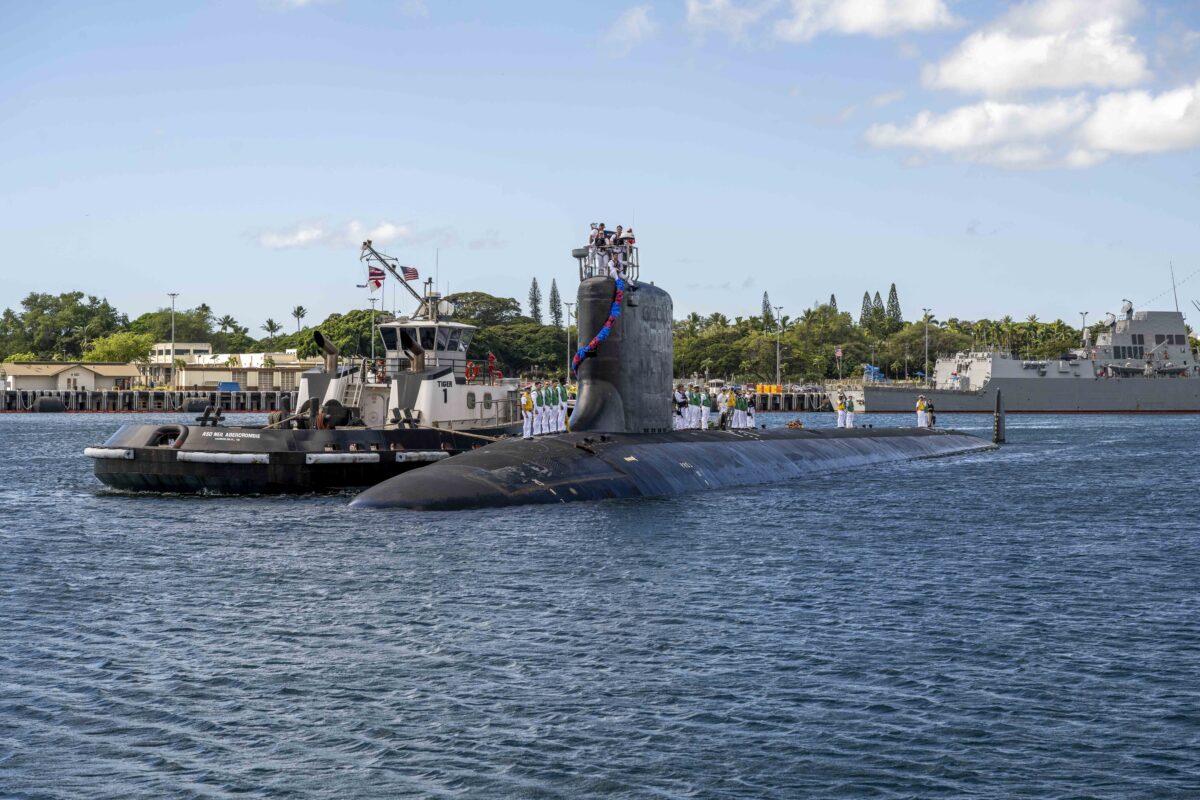
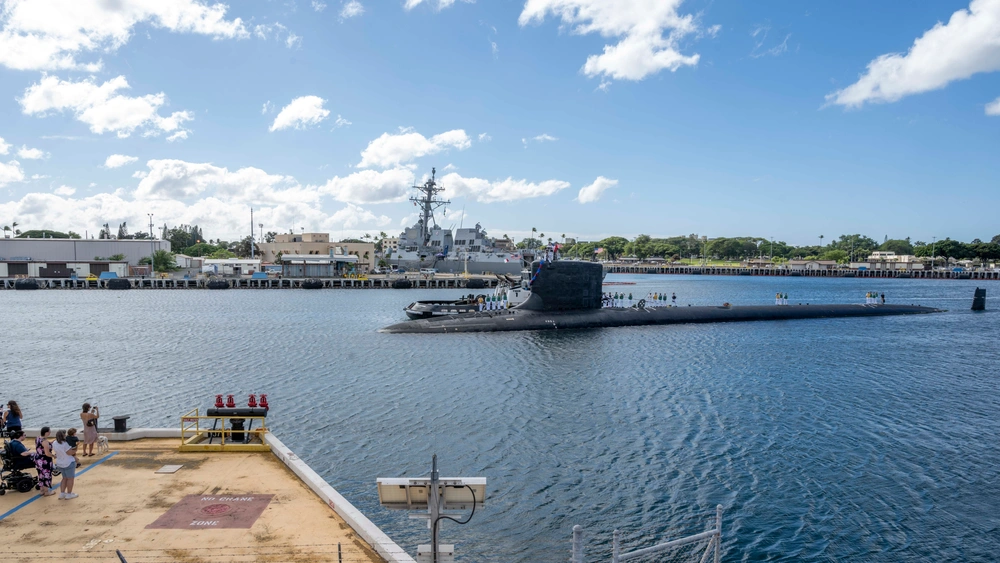
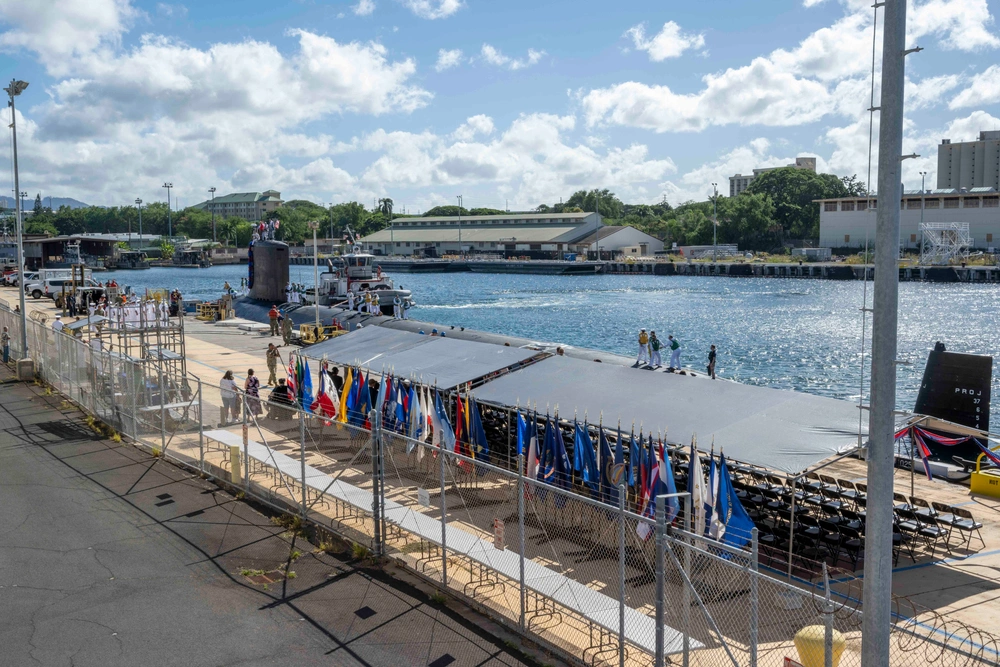
The Virginia-class fast-attack submarine USS Montana (SSN 794) arrived at Joint Base Pearl Harbor-Hickam following a change of homeport from Naval Station Norfolk, Virginia, December 23, 2024.

INDEPENDENT RECORD By Lt. j.g. Paul Fletcher, Commander, Submarine Force, U.S. Pacific Fleet Public Affairs

The USS Montana, a Virginia-class fast-attack submarine, arrived Dec. 23 at its new Pacific Fleet homeport, Joint Base Pearl Harbor-Hickam in Hawaii.

The $2.6 billion USS Montana, also known as SSN 794, changed its homeport from Naval Station Norfolk, Virginia, the U.S. Navy said in a news release. It marks the ninth Virginia-class fast-attack submarine home-ported at Joint Base Pearl Harbor-Hickam. It will be assigned to Submarine Squadron 1 and is expected to serve the nation with a range of missions around the world for more than three decades, officials said.

“We’re all very excited to be here in Pearl Harbor and we appreciate the great welcome,” Cmdr. John Gilligan, commanding officer of USS Montana, said in the news release.

He credited the crew for “extraordinary work in Virginia to get to this significant milestone.” Capt. Aaron Peterson, commander, Submarine Squadron 1, met the Montana pier-side upon arrival.

“On behalf of the Pacific Submarine Force Ohana, I enthusiastically welcome the officers and crew of the good ship Montana, with the warmth, culture, and spirit unique to the state of Hawaii,” he said. Before finishing its homeport shift from the East Coast, Montana completed a post-shakedown availability at Newport News Shipbuilding and was redelivered to the Navy in November 2024.

“Through a great effort by the crew, working with our industry partners, we’ve completed our availability and rejoined the Fleet. We’re ready to execute any task we’re called upon to complete throughout the Indo-Pacific,” Gilligan said.

Commissioned on June 25, 2022, at Naval Station Norfolk, Montana is the second warship to be named after the state, following the armored cruiser USS Montana (ACR 13). The submarine is more than 377 feet long and can displace nearly 7,800 tons. Montana has a crew of nearly 140 sailors — all of whom have been named by Gov. Greg Gianforte as “honorary Montanans,” — and can support various missions, including anti-submarine warfare, anti-surface ship warfare, strike warfare, and intelligence, surveillance and reconnaissance.

The U.S. Pacific Fleet Submarine Force provides strategic deterrence, anti-submarine warfare, anti-surface warfare, precision land strike, intelligence, surveillance, reconnaissance, and early warning and special warfare capabilities around the globe.

Ron Davis, chair of the Montana-based USS Montana Committee, praised the reaching of the milestone.

“It signals that the submarine is that much closer to being tasked to accomplish any of a number of different missions as part of the Pacific Fleet,” he said, adding the committee and all Montanans will continue to proudly support the Montana as it settles in Hawaii “and through her service life.”

The nonprofit, nonpartisan committee is a group of volunteers from across the state who support the USS Montana. It was endorsed by the governor and Legislature in 2017.

The ship is decorated with a Montana theme with state rooms named after Montana cities. Passageways are named for Montana rivers. The crew mess area, called the Big Sky Saloon, includes a Glacier Park panorama.

The submarine also has a tribal victory/war song to be played aboard the submarine when the crew is called to battle stations. And in honor of the Treasure State’s past of vigilante justice in the 19th century, the crew has adopted the nickname “The Vigilantes of the Deep.” For more information, go to: https://ussmontanacommittee.us/.

Battle of the Bulge: A Montana Perspective on the 80th Anniversary

Press Release: Battle of the Bulge December 1944 - January 1945

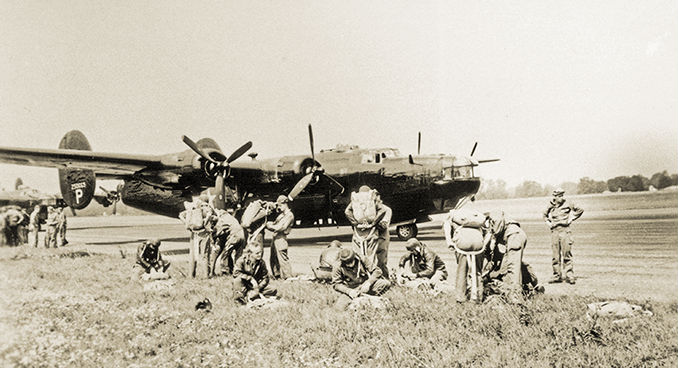
Join the Montana Military Museum on historic Fort William Henry Harrison Thursday, December 19, 2024 from 9 AM-4 PM for a tribute to the Montanans who participated and sacrificed in World War II largest’s allied military battle against the German forces in the European war theater, Christmas 1944 and start of the New Year 1945.

Over three hundred Montanans in various units participated in this battle under the most trying of environmental conditions. acquitting themselves most admirably. Come and hear some of their stories. Colonel John Driscoll has been. Asked to speak about his and his co-author Randall LeCocqe ‘s recent book entitled, The Battle of the Bulge: A Montana Perspective.

Battle of the Bulge Perspective based on various reviews—–

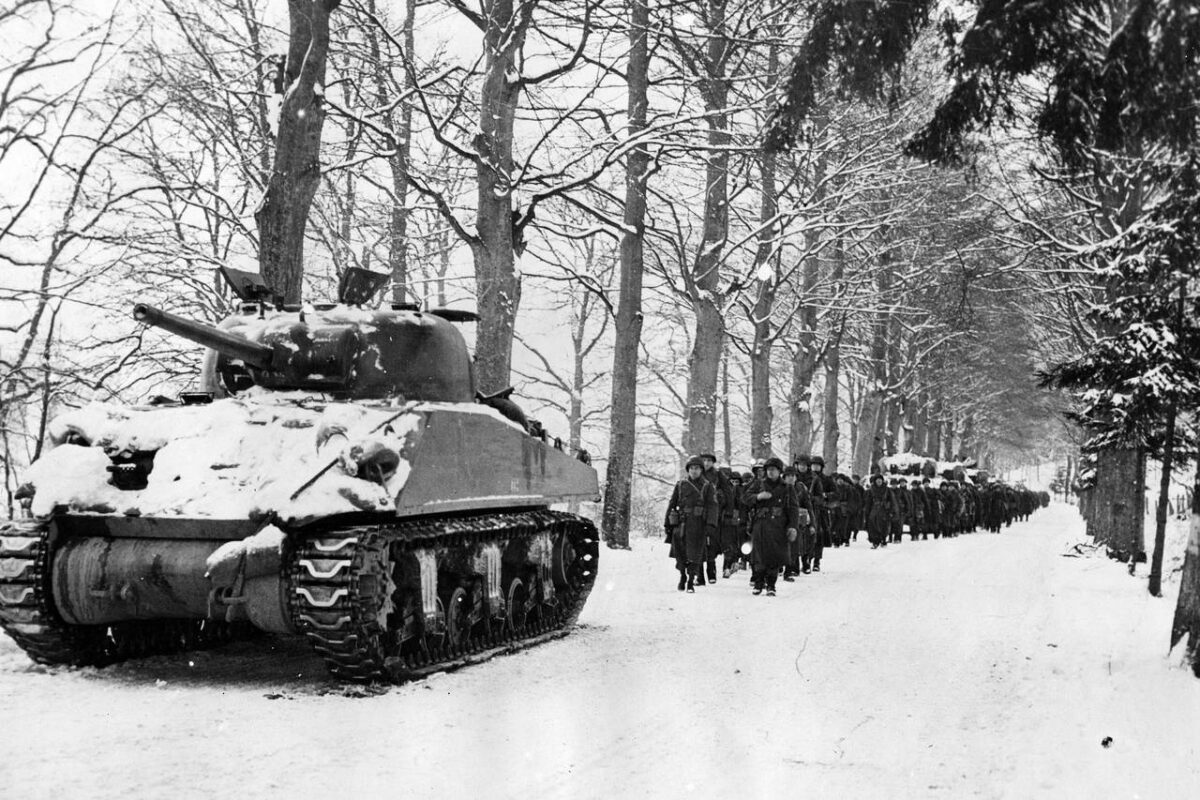
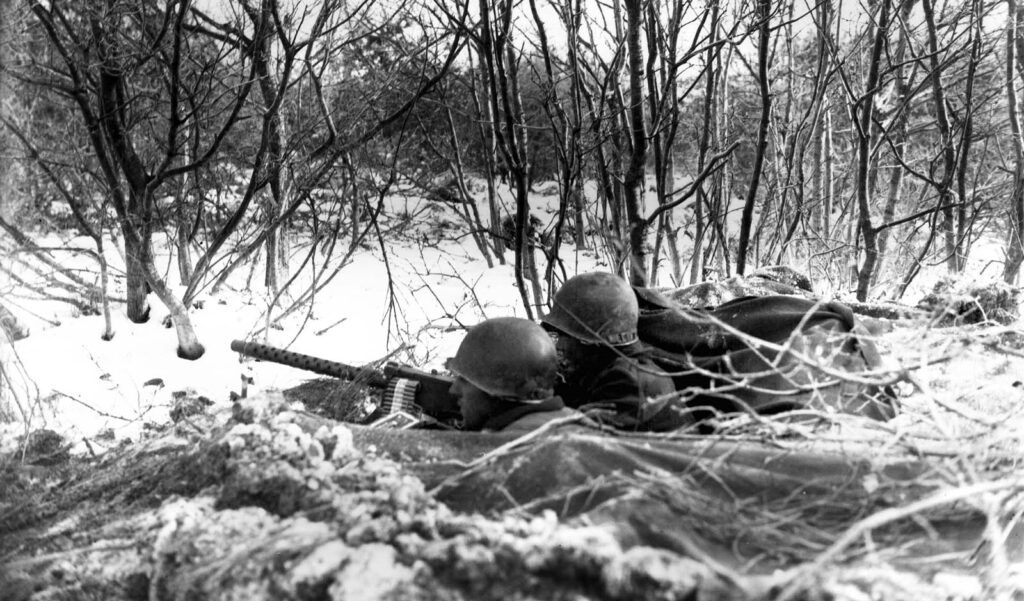
On December 16, 1944, the serene winter landscape of the Ardennes forest erupted into chaos as German forces launched a massive surprise assault on Allied troops. This confrontation, known as the Battle of the Bulge, became one of the most critical turning points of World War II. The German plan was audacious: to divide Allied forces, encircle and annihilate several armies, and compel the Western Allies into negotiating peace. While the offensive initially succeeded, it failed, signaling the beginning of Nazi Germany’s decline. The operation, code-named Wacht am Rhein (Watch on the Rhine), was carefully orchestrated by Adolf Hitler and his generals. Hitler believed a bold counteroffensive could reverse Germany’s losses following the Allied invasion of Normandy and their relentless push through France. The Ardennes forest, with its dense woods and rugged terrain, was chosen as the attack site because the Allies had lightly defended it, assuming it was an unlikely location for an offensive.
Germany prepared a massive force of 200,000 troops, over 1,000 tanks and assault vehicles, and extensive artillery. Three key armies spearheaded the operation: the Sixth SS Panzer Army led by General Sepp Dietrich, the Fifth Panzer Army under General Hasso von Manteuffel, and the Seventh Army commanded by General Erich Brandenberger. Their mission was to break through Allied lines, capture Antwerp, and cripple the Allies’ supply chain.

At dawn on December 16, German forces struck with devastating artillery barrages, followed by infantry and tank assaults. Poor weather, including heavy fog, grounded Allied air support, giving the Germans a temporary advantage. Entire divisions of unseasoned and fatigued American troops stationed in the Ardennes were caught off guard and overwhelmed. The German advance pushed Allied lines back, creating a 50-mile-wide bulge in the front—hence the battle’s name.

A pivotal moment unfolded in the Belgian town of Bastogne, a critical crossroads. German forces encircled the town, but the 101st Airborne Division, under General Anthony McAuliffe, held firm despite being heavily outnumbered. When the Germans demanded their surrender, McAuliffe famously replied, “Nuts!” The defenders of Bastogne endured relentless attacks and freezing winter conditions until General George S. Patton’s Third Army arrived to relieve them on December 26. Although the Germans made significant early gains, their advance soon stalled due to logistical challenges. Fuel shortages left tanks stranded, and their supply lines stretched thin. Meanwhile, the Allies regrouped. By December 23, improving weather conditions allowed Allied air forces to strike back. Bombers and fighter planes destroyed German supply routes and troop positions, turning the momentum in favor of the Allies.

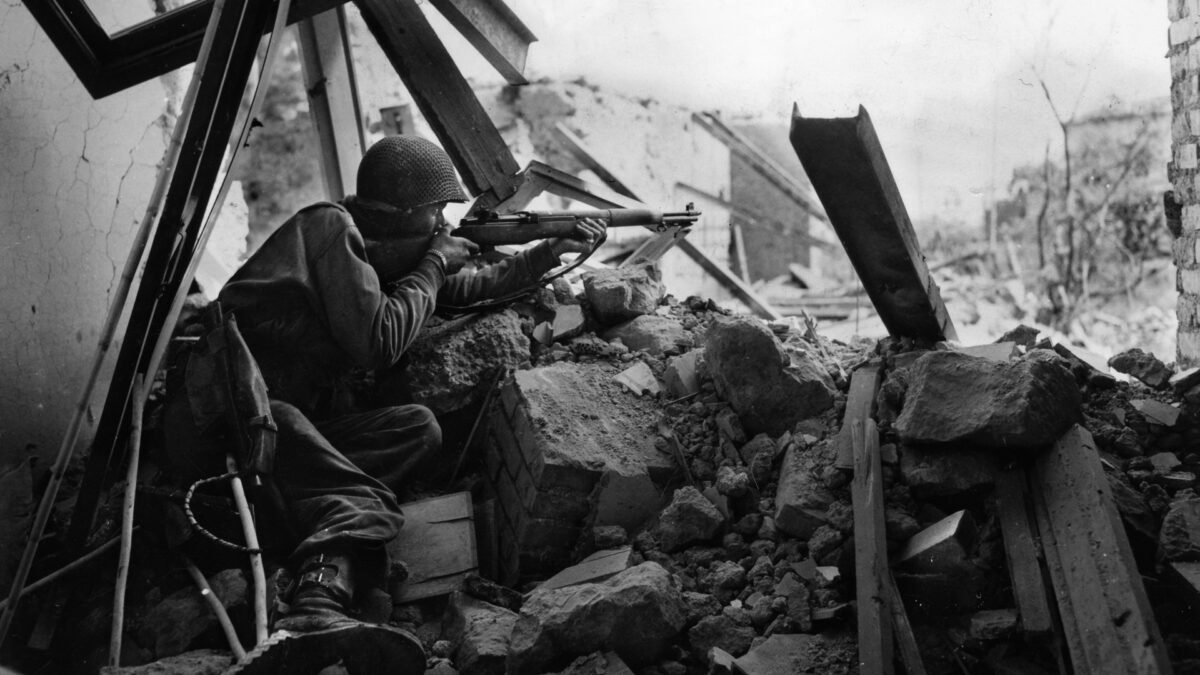
By late December, the Allies launched a counteroffensive from both the north and south, closing in on the German bulge. The fighting was intense, with villages and towns changing hands multiple times. Exhausted and suffering heavy losses, German forces began retreating by early January 1945.

‘Bomb-blasted American foothold”: How a Butte man survived Wake Island, life as POW in WWII

By Tracy Thornton, Montana Standard

Shortly before 8 a.m. on a Sunday, Dec. 7, 1941, the Japanese began their assault on the U.S. Naval Base at Pearl Harbor. The two-hour surprise attack killed an estimated 2,403 American men and women, and nearly decimated the U.S. Naval fleet.

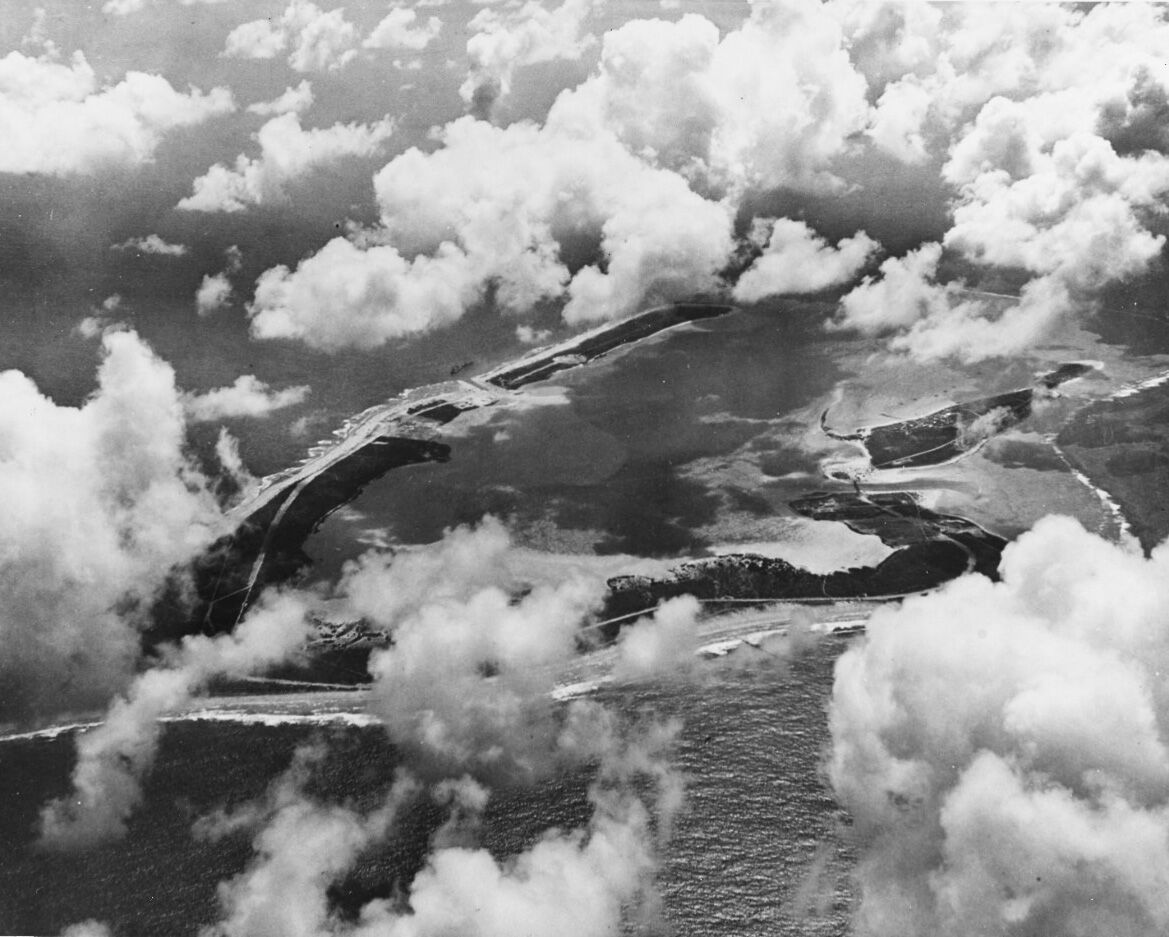
Five hours later, the Japanese would begin another bombing raid 2,300 miles away, at Wake Island and its smaller islands, Peale and Wilkes. Stationed on the islands were nearly 525 U.S. military personnel — the majority being Marines and sailors. More than double that amount was the number of American civilian workers also on the island, there to construct military facilities.

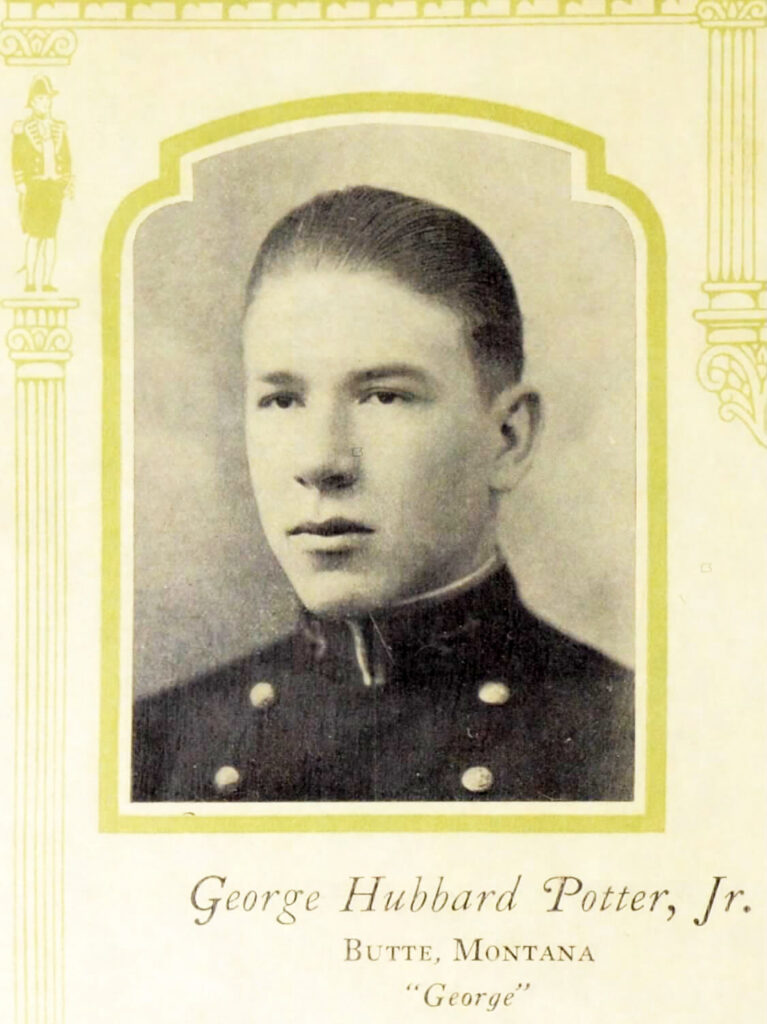
The troops on Wake Island fought the good fight; combatants included a Butte man, Major George Hubbard Potter Jr., who was second in command. In the end, though, the Americans were far outnumbered and surrendered two days before Christmas.

Major Potter, with the Marine Corps’ 1st Defense Battalion, previously was stationed at Pearl Harbor, where his wife Octavia and infant son George lived, but was shipped to Wake Island in October 1941.

Potter would spend the rest of the war as a prisoner of war. “Allied troops who had the misfortune to be taken prisoner by the Japanese during World War II quickly learned that the Geneva Convention might as well not exist. Indeed, they endured years of not only malnutrition and starvation, disease and general neglect — resisting all the while — but also torture, slave labor and other war crimes,” according to a 2016 article published by the U.S. Army.

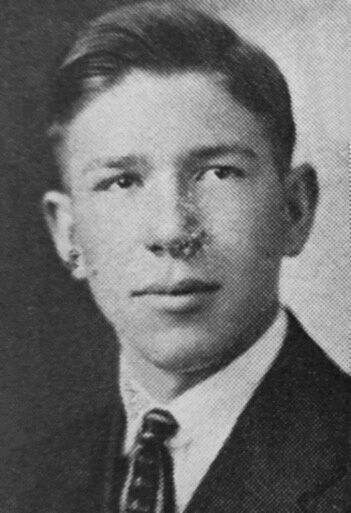
The son of George and Helen Potter, the younger Potter was born in 1906 in Ennis. His family, including two brothers, Ralph and Clyde, moved to Butte when he was young. A student at Webster Grade School, Potter graduated from Butte High School in 1923. Nicknamed “Gorg,” as a senior, he was president of the school’s mathematics club.

Potter would continue his education at the U.S. Naval Academy in Annapolis, Maryland, graduating in 1927, and was then commissioned a second lieutenant in the Marine Corps.

Being a Marine was Potter’s chosen career. By 1936, he was a captain and later promoted to major.
George Hubbard Potter Jr. graduated from Butte High School in 1923. Credit: 1923 Butte High School yearbook
This photograph of George Potter Jr., appeared in the 1927 Naval Academy annual titled 'The Lucky Bag' yearbook. Credit: 1927 Naval Academy annual
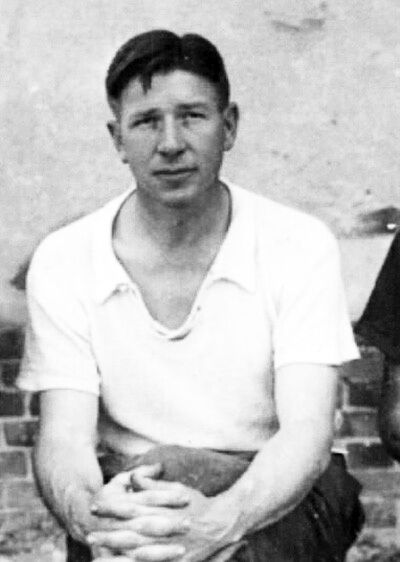
It was early days as a prisoner of war when this photograph was taken of George Hubbard Potter Jr. Credit: USMC photo
After the Wake attack Potter was a POW for the next three years and eight months. He remained on Wake Island for Christmas 1941, but by Jan. 15, 1942, was a passenger aboard the Nitta Maru, a Japanese aircraft carrier, bound for Zentsuji, a prison camp in Japan. En route to the prison camp, five American sailors aboard that same ship were beheaded and then thrown overboard.

The only prisoners left on Wake Island were 98 American civilian workers, forced to work on various projects. According to the U.S. Naval Institute, all the men were executed by Japanese soldiers and buried in a mass grave on Oct. 7, 1943, “to eliminate the threat they might pose during the coming invasion” with American forces.

It wasn’t until April 1942 that Potter’s wife would receive any word from her husband. A message from Potter to his wife was broadcast via radio.

He said, in part, “Do not be worried about me. I’ll be all right but I am most concerned for your and the baby’s welfare, and about dad’s health.”

Potter would remain at Zentsuji until June 23, 1945, when he would be transferred to a camp located in the hills of Honshu, Japan.

Now 50 pounds lighter, he would be liberated from this camp not long after Japan surrendered on Aug. 15, 1945.

In a post-war interview, Potter, who by then had been promoted to the rank of lieutenant colonel, shared his war experiences with a Montana Standard reporter.

“The dwindled Yank force dug deeper and fought more fiercely for the bomb-blasted American foothold,” he said of the initial Battle of Wake Island.

Potter also talked about life in the POW camps, specifically Zentsuji.

“The Americans at the camp included 350 officers, enlisted men, nurses, and a few civilians,” he said.

Potter also stressed that the treatment of prisoners escalated as the war progressed. When it became clear that Allied forces would soon win the war, the atrocities got even worse.

“They became progressively that way as the tide of war set against them,” said Potter.

After serving 21 years, Potter, who would become a brigadier general, would retire from the Marine Corps in August 1948. The former Butte man died Sept. 17, 1983, in Florida, and is buried, along with his wife Octavia, at Arlington National Cemetery in Virginia.

80th Anniversary First Special Service Force Deactivation 

Helena, MT – 80 years ago, December 5, 1944, the First Special Service Force held its final formation and deactivation ceremony at Villeneuve-Loubet, France on the Loup River flats.

The First Special Service Force was a unique joint Canadian-American top-secret force constituted under COL Robert T. Frederick on July 9, 1942 at Fort William Henry Harrison west of Helena, Montana. The First Special Service Force was airborne-trained and highly skilled in mountain operations and amphibious assaults with tough, physical training concentrated on weapons proficiency and demolitions. When tested by the US Army prior to deployment, the First Special Service Force scored the highest in infantry proficiency of any unit in the Army.

On August 15, 1943, the First Special Service Force made their first amphibious landing on the island of Kiska in the Aleutian Islands. As part of Operation Cottage, serving with the US 7th Infantry Division and Canadian 6th Infantry Division, the First Special Service Force’s First and Third Regiments landed on the island under the cover of darkness while Second Regiment was in reserve, waiting to parachute onto the island when needed. It was discovered after the landing that the Japanese had left the island under the cover of darkness and fog three days earlier

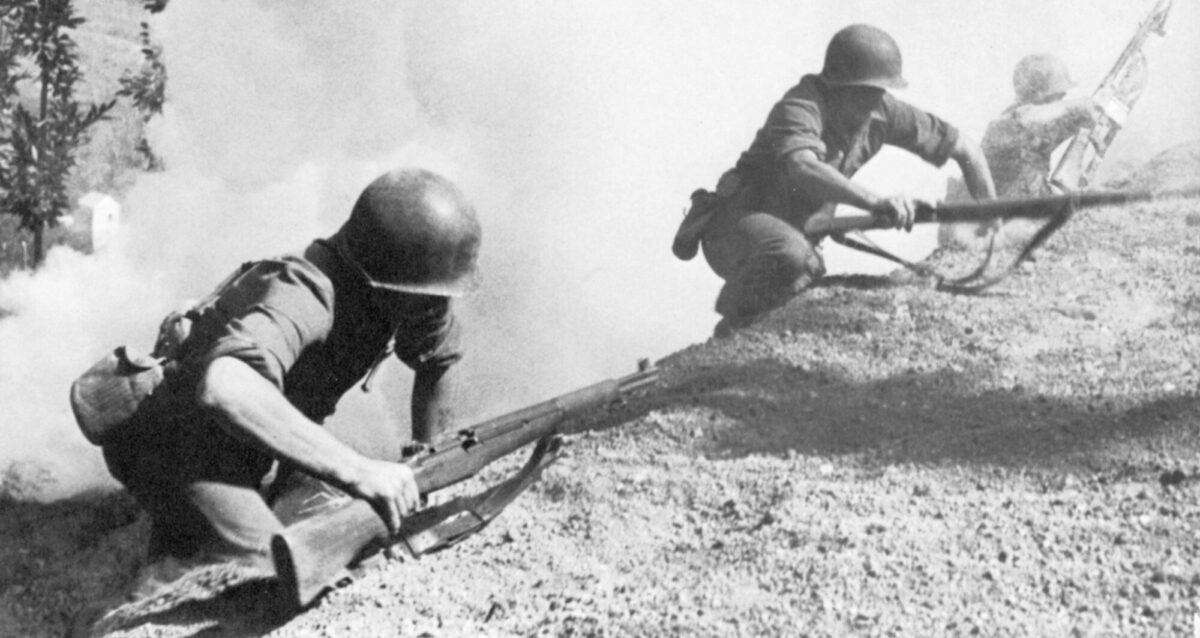
The First Special Service Force was quickly redeployed to the Mediterranean Theater, arriving in Italy on November 19, 1943. The Force was immediately assigned the task of clearing the German soldiers off Monte la Defensa, along with several other mountain tops of the Winter Line. On the night of December 1, 1943, the First Special Service Force marched 10 miles in the snow and rain of the Italian winter, and under the cover of darkness, to the base of the northern cliffs of Monte la Defensa. The Force waited in silence throughout the day of December 2, close enough to hear the German soldiers talking; close enough to smell their food cooking. Under the cover of darkness on the night of December 2, 2nd Regiment of the First Special Service Force scaled the 300-foot cliffs on the north side of la Defense in fog, rain and snow. By daybreak on the morning of December 3, 300 Forcemen were on top of the mountain when the battle began. Within four hours the men of the First Special Service Force had pushed the German soldiers off la Defensa. For the next six weeks the First Special Force cleared the mountain tops of the Winter Line, fighting north Casino. The First Special Service Force was relieved on January 16, 1943 after 45 days of continuous combat. The Force’s combat echelon on December 3, 1943, the battle of la Defensa, was 1,800 men. On January 16, 1943, when the Force was relieved, fewer than 500 Forcemen came out of the mountains.

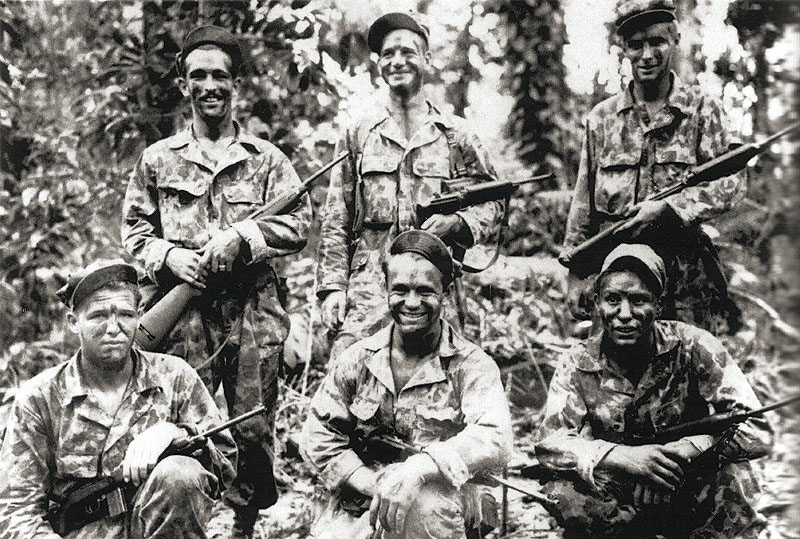
On February 2, 1944, the Force moved north and played a key role at Anzio, responsible for eight miles of the right flank with a total combat strength of only 1,200 soldiers. Significantly outnumbered by the Herman Goering Division, the FSSF held a division-sized sector along the Mussolini Canal. For 99 days, the FSSF conducted aggressive night patrols and raids by blackened faced Forceman, earning them the nickname “Black Devils” by the opposing Germans.

On the morning of May23, 1944 the Allies broke out of the Anzio Beachhead, driving toward Rome. The First Special Service Force drove northeast into the mountains surrounding Anzio. For the next two weeks the Force fought through the Lepini heights to Artena and Segni, after capturing Mt. Arrestino. After one week of fighting following the Anzio breakout, the First Special Service Force had lost over 40% of their combat strength. On June 4, 1944 at 6:00 am, a FSSF patrol lead by Captain Mark Radcliffe entered Rome, the first allied unit to enter the German occupied Eternal City. The mission of the First Special Service Force was to secure the Rome bridges crossing the Tiber River before they were destroyed by the retreating German Army. Two days later, June 6, 1944, the largest land, sea, and air invasion ever attempted began, D-Day.

The Mediterranean Campaign of the European Theater was part of the strategy and planning for the D-Day invasion. The First Special Service Force was an integral part of this strategy. Beginning in September, 1943, the Allies pushed the German and Italian military north, liberating the Italian oppressed and eventually liberating Rome. Part of this strategy was also to tie up as many German soldiers as possible in Italy to thin the German ranks available to defend the western shores of Normandy. By January, 1944 a reinforced German Army of 23 divisions, consisted of 215,000 troops engaged in the south and 265,000 troops in reserve in the north. As the Italian Campaign drug on in early 1944, more German troops were moved from France to Italy. Had these German troops been available to defend the D-Day Normandy landings, the outcome may have been much different.

On August 15, 1944, one year to the day after the Kiska landing, the Force made an amphibious landing on Southern France as part of Operation Dragoon and the liberation of Southern France. The Force seized two islands off the coast of Southern France to open the way for the Allied landing force, and then moved to the mainland, fighting northeast along the coast through the towns of Grasse, Plascassiere, and Menton. The Force was in continuous action for the next 15 weeks, engaged in bitter skirmishes to liberate the towns and peaks of Southern France.

On December 5, 1944, the First Special Service Force held its final formation and deactivation ceremony. At 2:00 pm the force gathered on the Loup River flats near Villeneuve-Loubet, France. First the chaplains read a prayer for the final dead who had fallen from Hyeres to Menton to join the honored dead of other campaigns. Then the United States, Canadian and FSSF flags moved forward, and the deactivation orders were read. Slowly the FSSF flag was wound to its staff and the casing slipped over it. Then the Canadians withdrew from ranks and formed their own battalion to march behind the Canadian flag, passing in review front of the U.S. contingent standing with empty ranks.

A quote from The First Special Service Force, A War History of the North Americans 1942-1944, by LTC Robert D Burhans “The Force, as history would know it, had finally dissolved to its national counterparts. An epitaph is not appropriate, for it did not die that afternoon at Villeneuve-Loubet. Its memory is still young in the hearts and minds of families who gave their sons to its ranks, and in the heart of every man who wore the red Spearhead. Rather it can be summed up in the words of Sholto Watt, of the Montreal Standard, who knew the Force best of any man outside it: I can testify to their spectacular power and efficiency, their marvelous morale and their never-failing spirit of attack. They were exactly what one would expect from North America’s best-an inspiration to see and a terror to their enemy. But the importance of the First Special Service Force in world history, and their influence on the future, are much greater than even their outstanding military merit would deserve. The significance of this Force is that it was the first joint force of its kind, drawn from two neighbor democracies, and that it was a brilliant success throughout. It is by no means fanciful to see in it the prototype of the world police of that world community which has for so long been the dream of men of goodwill.

Their legend is a feat of arms which will remain celebrated in military history which should be remembered even longer-an example of international brotherhood which deserves enduring honor.

In 251 days of combat the Force suffered 2,314 casualties – 134% of its combat strength. They captured 30,000 German prisoners, won five US campaign stars and eight Canadian battle honors. The Force never failed a mission. The surviving veterans of the FSSF dedicated a monument to their fallen brothers in August 1947 in Helena’s Memorial Park. The Cenotaph east of the monument includes the names of 488 men who made the ultimate sacrifice in World War II.

Most gratifying to the Veterans of the FSSF is that its traditions and honors have not died but are carried forward, with its lineage embracing the outstanding active Special Forces units of two great democracies: The Canadian Special Operations Regiment and the Special Forces of the United States Army.

On February 3, 2015, the United States Congress presented the Congressional Gold Medal to the First Special Service Force, “In recognition of its superior service during World War II”. Forty-three original FSSF Veterans attended the ceremony at the United States Capitol, along with over 800 family members, friends, and members of Congress.

On August 21, 2015 veterans of the First Special Service Force presented their Congressional Gold Medal to Fort William Henry Harrison, where the Force trained 73 years earlier.

For further information, contact Bill Woon, 461-7485, or Ray Read, 235-0290.